


Why Organic Farming is the Only Way Forward: Health, Economy & Environment at Stake
Introduction: Why This Conversation Matters
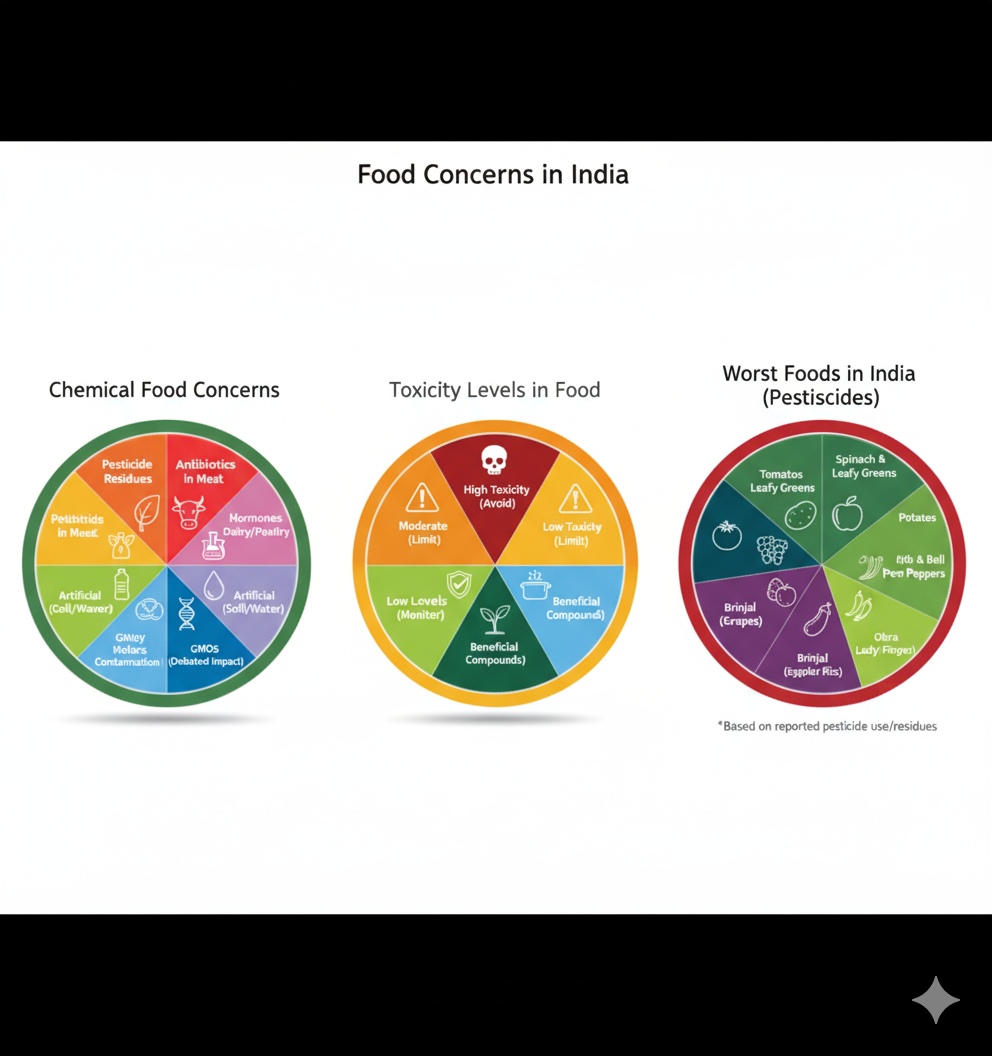
Over the last few decades, scientific research has consistently shown the toxic effects of chemical fertilizers and pesticides on human health, the economy, and the environment. These substances have been linked to ADHD, kidney and liver disorders, respiratory diseases, infant mortality, early puberty, cancers, and even premature deaths. “Every year, 385 million people suffer from pesticide poisoning. Yet, 99% of our food still comes from chemically grown farms.” (WHO)
The world’s shift to industrial farming post–World War II in the US and Europe—and later in India after the Green Revolution—brought short-term production gains, but the long-term costs are devastating: soil degradation, water contamination, biodiversity loss, and rising healthcare expenses.
The Hidden Costs of Chemical Farming
-
Impact on Consumers
- Studies show pesticide-free, organic food supports recovery from chronic illnesses.
- Continuous consumption of chemically grown food is directly linked to cancers, reproductive disorders, and neurological issues.
- Case in point: Kasargod district, Kerala, where aerial spraying of Endosulfan pesticide caused birth deformities, cancers, and neurological damage across generations.
- Globally, the World Health Organization (WHO) estimates that these cases of unintentional pesticide poisoning will be doubled in by 2030, if not checked or monitored, leading to more deaths.
2. Impact on Farmers
- In India, farmers spend ₹15,000–20,000 per acre annually on chemical fertilizers and pesticides. Organic farming eliminates this cost by using compost, FYM, and natural inputs.
- Many agricultural workers suffer from lung diseases, skin disorders, and pesticide poisoning due to direct exposure.
- Organic produce fetches a premium price, giving farmers better income security while safeguarding their health.
3. Impact on the Environment
- Pesticides kill microorganisms critical for soil fertility, disturbing ecosystems and reducing farm biodiversity.
- India lost 5,000+ edible and medicinal plant species after the Green Revolution due to monocropping of rice and wheat.
- Runoff from chemical farms contaminates rivers and groundwater, raising water treatment costs and reducing potable water availability.
The Economic Burden
- According to UNEP & FAO reports, the hidden costs of conventional farming globally exceed $3 trillion annually, including healthcare, biodiversity loss, and soil degradation.
- In India, studies suggest pesticide-related health costs alone run into ₹3,000–4,000 crore per year.
- The paradox: while chemical farming temporarily boosts yield, it reduces soil fertility over time, forcing farmers into a vicious cycle of higher input costs and lower returns.
Busting the Green Revolution Myth
Many believe that India’s agricultural production skyrocketed after the Green Revolution. While wheat and rice yields did increase initially, it came at the cost of:
- Soil infertility due to synthetic fertilizers.
- Loss of diversity: thousands of native grains, pulses, and medicinal plants disappeared.
- Unsustainable monocropping, making farms more vulnerable to pests, diseases, and climate shocks.
India is a land of biodiversity, yet monocropping has undermined our natural advantage. The solution lies in multi-cropping, crop rotation, and regenerative practices.
The Way Forward: Organic & Natural Farming
Organic farming is not a trend—it is a necessity for survival. It:
- Reduces farmer input costs.
- Ensures pesticide-free, nutrient-rich food for consumers.
- Restores soil health and biodiversity.
- Cuts healthcare costs and environmental damage.
Despite its benefits, organic farming contributes less than 1% of global production today. Unless this changes, 99% of the world will continue consuming food that slowly damages health and the planet.
My Journey & Invitation
"With over a decade of experience in CSR, sustainability, and organic farming, I've seen firsthand how our work creates healing and toxin-free products. Join Jivancharya to learn the core knowledge about food and clothing —your right to know — on how your food & clothing are grown, processed, and shipped to your doorsteps. As a conscious customer, you can safeguard yourself and your loved ones from the harmful effects and health hazards posed by chemicals and pesticides.
🌱 Do you believe chemical farming is harming our families and Mother Earth?
💬 Share your thoughts —let’s start a movement for safe, sustainable food for holistic Jivancharya by writing your concerns to us through the form provided on the contact us page.
Read More