
Blog

Benefits of moringa superfood

Benefits of moringa superfood - Why Moringa Deserves a Place in Every Home


Moringa is not just another health trend — it’s a bridge between ancient wisdom and modern nutrition.


Introduction: The Tree of Life


Moringa (Moringa oleifera), often called the “Miracle Tree” or “Shigru” in Ayurveda, is one of the most nutrient-dense plants on Earth. Every part of it — leaves, pods, seeds, gum, and bark — offers unique therapeutic and nutritional benefits.


Traditionally used across India for centuries, modern science now validates Moringa’s antioxidant, anti-inflammatory, and detoxifying properties.


From fighting fatigue to improving immunity, from detoxifying the body to nurturing the skin — it is truly food as medicine.


🌍 Global Usage and Recognition

In recent years, Moringa has become a global wellness trend:

  • In the U.S. & Europe, Moringa powder is used in smoothies, energy bars, and capsules.
  • In Africa, it’s promoted by NGOs to combat malnutrition.
  • In Japan & Korea, Moringa teas are known for detox and anti-aging benefits.
  • In India, it continues to be a daily household remedy — from curries to herbal tonics.

Even NASA once explored Moringa as a potential space crop due to its nutrient density and easy growth!

πŸ₯¦ What makes Moringa a Superfood?
Because it’s packed with more vitamins and minerals than most fruits and greens combined!
πŸ’ͺ 9.4g protein
πŸ’š 18.9mg Vitamin A
πŸ‹ 17.3mg Vitamin C
🦴 185mg Calcium
πŸ”‹ 4mg Iron
πŸ’¦ 337mg Potassium — per 100g of leaf powder!

At Jivancharya, we bring Moringa in its purest, residue-free, and sustainably sourced form — supporting both your wellness and the livelihoods of Indian farmers.
Each product is crafted with intention, connecting you to the earth, the farmer, and your inner balance.

Let’s explore the benefits of Moringa Leaves, Moringa Gum, and Moringa Bark, their different types, uses, and dosage for different age groups.

1. Moringa Leaves – The Green Superfood


🌾 Varieties in India


  • PKM-1 & PKM-2 (Tamil Nadu) – Fast-growing hybrid varieties; rich in protein and iron.
  • ODC-3 (Odisha) – Known for high leaf yield and better taste.
  • CO-1 (Coimbatore) – Commonly used for medicinal purposes and powders.
  • Local Desi Varieties (North India) – Preferred for traditional home remedies due to mild flavor and gum yield.


🌿 Key Benefits of Moringa Leaves

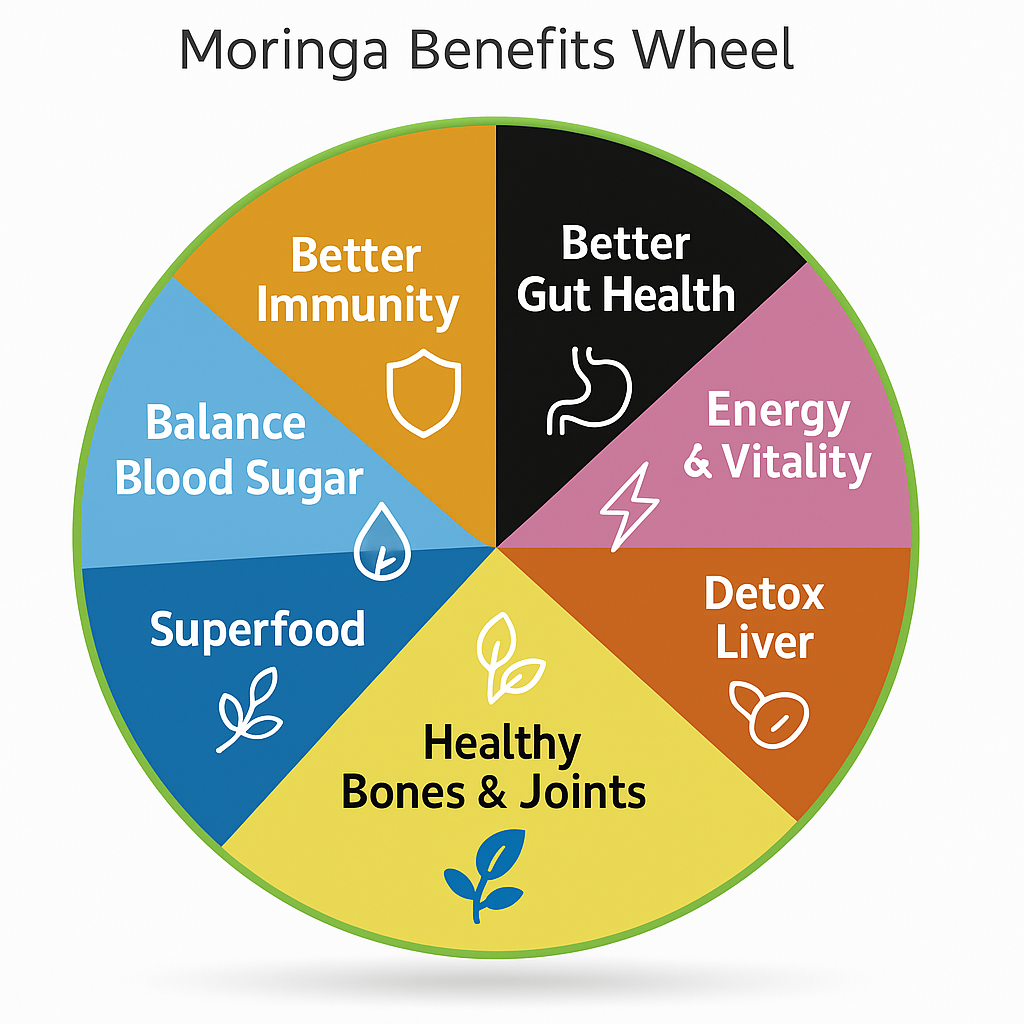
1. Boosts Immunity - High in Vitamin C, A, and zinc

2. Manages Blood Sugar - Natural plant insulin (chlorogenic acid) helps balance glucose

3. Improves Digestion - High fiber content supports gut health

4. Strengthens Bones - Rich in calcium and magnesium

5. Reduces Fatigue - Natural iron and amino acids boost energy

6. Supports Skin & Hair - Antioxidants and Vitamin E improve glow and elasticity


πŸ•’ When and How to Take Moringa Leaves

1. Moringa Leaf Powder - Take Morning (empty stomach) or before lunch. Mix 1 tsp in warm water or smoothie. Avoid with coffee/tea immediately after. 

2. Moringa Leaf - Take it in Mid-day meal. You can steam lightly or use in curry/soups. Avoid overcooking or boiling.

3. Capsules/Tablets -  Take it in the morning and evening as per the doses suggested by Ayurvedacharya and doctors. Check for a certified/organic source. 


πŸ’§ 2. Moringa Gum (Gond Moringa)

Moringa gum is the natural resin exuded from the bark — golden or brownish in color, sticky, and rich in polysaccharides and alkaloids.

It is also known as Gond Moringa, this golden resin is deeply valued in Ayurveda for its cooling and detoxifying properties.


Benefits of Moringa Gum:

  • Strengthens joints and bones
  • Improves vitality and stamina
  • Balances body heat during summer
  • Supports skin hydration and glow

How to Use Moringa Gum:

  • Soak a few small crystals overnight; consume in the morning.
  • Add to laddus with moong dal, ghee, and dry fruits for strength.
  • Mix ½ tsp gum powder in warm milk before bedtime.


🌼 Benefits of Moringa Gum

1. Joint and Bone Health - Strengthens joints; reduces inflammation

2. Vitality & Stamina - Used in Ayurvedic laddu formulations

3. Natural Detox -  Helps flush toxins and balance Pitta

4. Skin Health - Soothes rashes and improves complexion

5. - Cooling & Hydration - Especially beneficial in hot climates


Precautions & Safety Tips


  1. Avoid excess: Overconsumption may lead to nausea or diarrhoea.
  2. Pregnancy caution: Moringa bark and root may induce uterine contractions — avoid without medical advice.
  3. Medical conditions: Those on thyroid, diabetic, or hypertension medications should consult their doctor before use.
  4. Allergy check: Start with small doses to test tolerance.
  5. Storage: Keep in airtight glass jars, away from direct sunlight or moisture.


πŸ‘¨‍βš•οΈ Jivancharya’s Advice

At Jivancharya, we believe that nature heals best when consumed with awareness and balance.
Consulting a wellness expert or Ayurvedic practitioner helps align your Moringa usage with your body type (Dosha) — ensuring the best and safest results. Hence, we suggest that you first consult an expert before the consumption of any severe or terminal illness.


Moringa is a reminder that true healing doesn’t come from complexity — it comes from simplicity, purity, and nature’s rhythm.


Jivancharya Wellness Team


Our Journey & Invitation 

"With over a decade of experience in CSR, sustainability, and organic farming, we have witnessed how our work creates healing and toxin-free products and services. Join us as we keep sharing the best of research and grassroot experience throughout our journey—you can be part of the change by writing to us via the Contact Us page and sharing your thoughts and concerns. 

Read More
Tomatoes – exploring the ways of best selections, their benefits, uses and risks of having pesticide-exposed tomatoes

Tomatoes - Exploring the ways of best selections, their benefits, uses and risks of having pesticide-exposed tomatoes.

The Power of the Tomato: More Than Just a Salad Staple

Tomatoes are ubiquitous in kitchens around the world. But beyond their culinary versatility, they carry a host of nutritional benefits—and emerging (though not conclusive) research suggests that they may play a role in cancer prevention, especially in the early stages. In this post, we’ll explore: the history and types of tomatoes, how different countries use them, what makes organic/natural tomatoes special, the dark side of pesticide use (especially “Class I / highly hazardous pesticides”) in tomato production (with emphasis on India), and a head-to-head comparison between organic/natural and conventional tomatoes. At the end, I’ll propose some additional angles or sub-topics you can incorporate.


History of the Tomatoes

The wild ancestors of the tomato (genus Solanum, species such as Solanum pimpinellifolium) originated in the Andean region of western South America (parts of present-day Peru, Ecuador, and Bolivia. Genetic and archaeological research suggests that the cherry-sized form may have diverged naturally about 80,000 years ago, and human domestication occurred later in Mesoamerica (Mexico/Central America) around 7,000 years ago. The Spanish explorers brought tomatoes to Europe in the 16th century, where they were initially met with suspicion (because the plant belongs to the nightshade family, many of whose members are toxic). The Italians embraced tomatoes sooner than many, dubbing them pomi d’oro (golden apple) or “love apple.” Over time, they became integral to Mediterranean cuisine. Over subsequent centuries, selection, breeding, and global trade transformed the tomato from small wild berries to the large, varied cultivars we see today.

Thus, what began as a wild berry in the Andes has become one of the world’s most widely consumed and adapted fruits (botanically speaking)—even though, culturally, we treat it like a vegetable.


Regional / Country Usage & Trends

  • Tomatoes are used globally in a wide range of forms: fresh, sauces, pastes, soups, canned, ketchup, purees, juices, sun-dried, etc.
  • In Italy and the Mediterranean, tomatoes are foundational to pasta sauces, pizzas, bruschetta, etc.
  • In India, tomatoes are widely used in curries, gravies, chutneys, sauces, and fresh salads.
  • In the United States, the tomato industry supports fresh market sales, processed tomato products (canned, sauces, tomato paste), ketchup, and juice.
  • In China and Turkey, large volumes of tomato paste / processed tomato goods are produced for domestic consumption and export.
  • Tomatoes are among the top consumed vegetables/fruits globally, and processed tomato products form a high-value industrial chain in many countries.


Types of Tomatoes & Their Global Use

Major Tomato Types (by form/usage)

Tomato cultivars are highly diverse. Some commonly known types include:

  • Cherry/grape tomatoes: small, round or oblong, used in salads or as snacking tomatoes.
  • Plum/paste / Roma: elongated or pear-shaped, denser flesh, fewer seeds—ideal for sauces, pastes, canning (e.g. the Roma tomato)
  • Slicing standard: large, juicy, used for fresh slicing in sandwiches, burgers, etc.
  • Speciality/cherry 100, cocktail, grape cluster: smaller, flavorful, often for local markets or gourmet use.
  • Because of breeding for yield, shelf life, and transport durability, many commercial tomatoes today compromise flavour in favour of these traits.

Health & Nutritional Benefits of Tomatoes (with Focus on Cancer)

Tomatoes are nutritionally rich and contain several compounds of interest for human health. Some of the more important ones:

  • Lycopene – a red carotenoid pigment, potent antioxidant.
  • Beta-carotene, other carotenoids
  • Vitamin C, vitamin A precursors, vitamin E
  • Potassium, fibre, folate, polyphenols
  • Various phytochemicals that contribute to antioxidant, anti-inflammatory, and cell signalling effects

Evidence for Anti-cancer / Preventive Effects

  • While one must temper claims with caution (because human intervention trials are limited), here is a summary of current scientific evidence:
  • Observational epidemiological studies and meta-analyses suggest that higher tomato or lycopene intake may be associated with lower risk (often 20–35 %) of prostate cancer, and weaker associations for cancers of the lung, stomach, and other sites. American Institute for Cancer Research+3PMC+3PMC+3
  • Experimental cell and animal studies show that lycopene can inhibit growth of cancer cells, induce apoptosis (programmed cell death), modulate growth factor signaling, arrest cell cycle progression, enhance intercellular communication (gap junctions), reduce oxidative stress, and suppress inflammation. PMC+2PMC+2
  • Cooked tomato products may yield higher bioavailability of lycopene (heat breaks down cell walls, increasing absorption) and may be more effective than raw tomatoes for some cancer risk reductions (e.g. prostate). World Cancer Research Fund+1

In summary, tomatoes are a valuable component of a healthful diet, and they contain compounds with plausible anti-cancer mechanisms, though we cannot state unequivocally that they “cure cancer,” especially in later stages. Claims are stronger for prevention or risk reduction in early or preclinical disease states.

Other Health Benefits

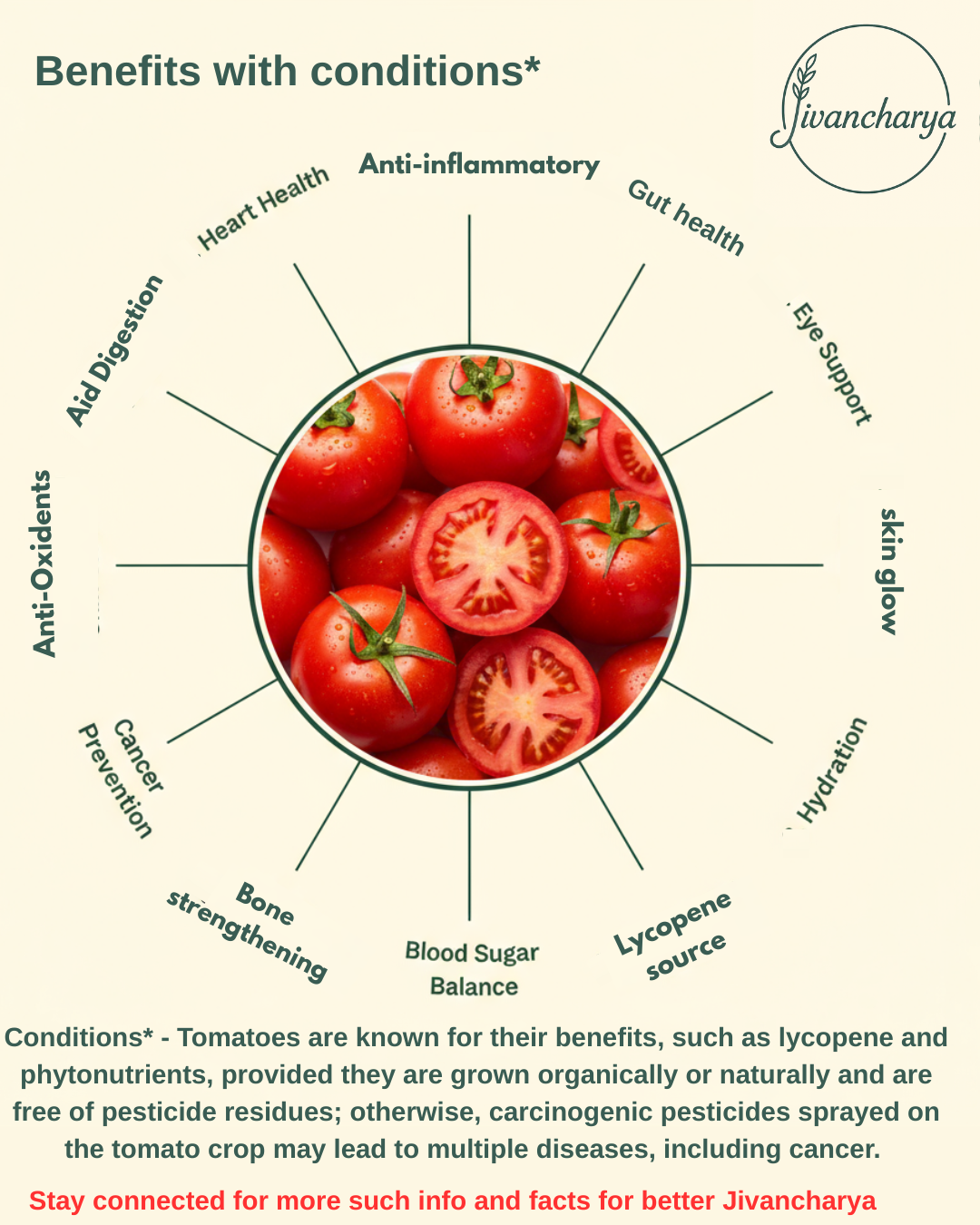
  • Antioxidant and anti-inflammatory effects
  • Cardiovascular health: lycopene and potassium help reduce LDL oxidation, lower blood pressure, improve lipid profiles
  • Skin health and UV protection (due to carotenoids)
  • Digestive health (fibre, water content)
  • Immune support (vitamin C and phytonutrients)
  • Possible benefits in glycemic control, though research is still emerging

Organic / Natural Tomatoes: What Makes Them Special?

  • “Organic” refers to production methods that avoid synthetic fertilisers, genetically modified organisms, and synthetic pesticides; “natural” is a less formal label, often meaning minimal chemical inputs.

Benefits / Advantages of Organic / Natural Tomatoes

  • Lower pesticide residues — Organic farming restricts or bans many synthetic pesticides, reducing consumer exposure to potentially harmful chemical residues.
  • Environmental sustainability — Better soil health, biodiversity, lower chemical runoff, less contamination of water bodies.
  • Taste and nutrient retention — Some small studies or anecdotal reports suggest that organic produce may retain more flavour or phytochemicals (though results are mixed).
  • Reduced exposure to antibiotic/chemical stress — For soil microorganisms, pollinators, and the surrounding ecosystem.
  • Consumer confidence/traceability — Labels and certifications give more transparency and assurance of farming practices.
  • However, it’s worth noting that organic does not guarantee zero risk (e.g. natural toxins, background contamination), but it generally shifts the balance toward lower synthetic chemical load.

Pesticides in Tomato Cultivation & “Class I / Highly Hazardous” Pesticides: The Problem

Overview & History of Hazardous Pesticide Use (with backlinks and citations)

  • Pesticide use in India began in 1948 (import of DDT and BHC). Over time, production and use expanded.
  • Many older pesticides (especially organochlorines, organophosphates) have been banned or restricted due to toxicity, persistence, bioaccumulation and their adverse health and environment impacts. MDPI+3PPQS+3PPQS+3
  • A 2015 review noted that in India, despite bans, persistent organic pollutants (POPs) and pesticide residues continue to be detected in agricultural produce like tomatoes and peppers. ScienceDirect+1
  • A recent 2024 analysis of pesticide regulation in India reports that as of March 2024, 29 pesticides are banned, 5 are prohibited for use (but permitted for some manufacture/export), and 16 have refused registration. MDPI
  • The European Parliament has flagged that banned pesticides from the EU are still found in goods exported from countries such as India (~24 % of samples tested had EU-banned pesticide residues). PAN Europe
  • Illicit or illegal pesticide trade remains a problem in many developing countries. A UN/industry study notes that India, China and Sri Lanka are among countries where pesticide misuse and illegal trade are significant issues. croplife.org

Class I / Highly Hazardous Pesticides & India

  • “Class I” is often a regulatory classification (or historical term) meaning extremely toxic or hazardous chemicals. In modern terminology, many would fall under Highly Hazardous Pesticides (HHPs) per WHO or FAO definitions.
  • India’s banned list includes older organochlorines such as aldrin, dieldrin, chlordane, endrin, etc. odishaagrilicense.nic.in+2PPQS+2
  • Endosulfan is a notorious example: used widely in India until public health concerns prompted its ban. The Endosulfan tragedy in Kerala (health impacts in Kasaragod district) drew attention to persistent damage from pesticide exposure. Wikipedia+1
  • Even though bans exist, enforcement is uneven. Some farmers may illegally continue using banned chemicals, or obtain them through illicit channels.
  • Monitoring studies on vegetables, including tomatoes, have found pesticide residues exceeding maximum residue limits (MRLs), sometimes involving banned substances or unregistered pesticide mixes. PubMed+3PMC+3ScienceDirect+3
  • The broad regulatory challenge is that in developing and transition economies, regulatory enforcement, farmer education, supply chain control, and traceability are often weaker—thus banned or highly hazardous substances may still circulate.

In short, while many pesticides are legally banned in India, illegal or illicit use still occurs, and residue studies show that produce (including tomatoes) sometimes bear these traces.

Comparison: Organic / Natural vs Conventional (with Pesticide Use)

  • Here’s a simplified comparative table :


  • Feature / Aspect
  • Organic / Natural Tomatoes
  • Conventional Tomatoes (with synthetic / possibly banned pesticides)
  • Pesticide / chemical inputs
  • Only approved natural or low-toxicity substances; synthetic, highly hazardous chemicals are disallowed
  • Use of synthetic fertilizers, fungicides, insecticides; potential use or residue of restricted / banned substances under weak oversight
  • Residue load risk (to consumer)
  • Lower probability of harmful pesticide residues; easier to meet MRLs
  • Higher risk of exceeding MRLs or containing banned pesticide residues
  • Environmental impact
  • Better for soil health, biodiversity, water quality, non-target organisms
  • Greater negative externalities: runoff, contamination, biodiversity loss, soil degradation
  • Cost / yield tradeoff
  • Often lower yields, higher labor cost, more labour-intensive management
  • Higher yields per hectare, lower labor per unit, more chemical efficiency—but with hidden costs
  • Flavor / nutrient retention
  • Some argue better flavor, richer phytochemical content (though evidence is mixed)
  • Often bred for shelf life, transport durability, and uniformity rather than taste
  • Consumer trust / traceability
  • Certifications (organic, natural, fair-trade) offer transparency
  • Potential opacity in pesticide practices, mixing, and traceability
  • Regulatory safety buffer
  • More buffer for food safety from pesticide overuse
  • Vulnerable to incidents of misuse, illegal spraying, incorrect dosage, or residue carryover
  • Sustainability / long-term resilience
  • More resilient to soil degradation, encourages closed nutrient cycles
  • Higher dependency on chemical inputs, vulnerable to pest resistance and environmental degradation
  • “Organic doesn’t mean zero risk, and “conventional methods aren't always harmful, as there are good practices like integrated nutrient and pest management, which help to reduce or eliminate the risk. If farmers use green-label pesticides within permissible limits, then they aren’t harmful to us or the ecosystem.

Conclusion & Caveats

  • Tomatoes are more than just colorful and tasty—they are a nutritional asset with a promising potential role in reducing the risk of certain cancers (especially when consumed consistently over time, and preferably in processed / cooked forms for better absorption). Their antioxidant, anti-inflammatory, and cell-regulating phytochemicals make them worthy of inclusion in a healthful diet.
  • However, caution is warranted: the science is not conclusive enough to claim that tomatoes cure cancer, particularly in advanced stages. Much of the evidence is observational, or from lab/animal models. Also, pesticide use presents a hidden risk: banned or highly hazardous chemicals can persist in produce and the environment, especially where regulatory enforcement is weak, as in parts of India.
  • Encouraging organic and natural tomato cultivation (or conventional cultivation augmented by IPM, residue monitoring, farmer education) is a pathway toward safer, healthier tomato consumption.


How to select good quality tomatoes


Cues for better selection of tomatoes

What to look for

Why it matters?

Smell / aroma

Near stem end, a fresh earthy / tomato-ish aroma. A strong fresh smell rather than no smell or off smell.

Aroma = volatile compounds that contribute to flavour; low aroma often = less flavour.

Color & uniformity

Mature colour consistent with variety (deep red, orange, yellow, etc). Some variation is fine (especially heirlooms).

Color reflects pigment development (carotenoids etc) and can reflect flavour potential.

Skin appearance / blemishes

A few natural marks or minor blemishes are okay. But avoid large soft spots, obvious decay, excessive cracks or very glossy coated skin.

Too perfect (especially in commercial large supply chain) may signal heavy chemical treatments, wax coatings, or picking before full flavour.

Firmness / texture

Should feel firm yet yield slightly under gentle pressure. Too hard = under-ripe; too soft = over-ripe or spoiling.

Texture affects mouth‐feel; very mealy or mushy = low flavour or poor quality.

Taste / flavour

Use a small slice: should have a balance of sweetness & acidity, a vibrant tomato flavour, not just watery / bland.

Taste is the ultimate test: if it tastes flat, it may have been grown for yield/transport rather than flavour.

Surface feel / coating

Natural tomatoes tend to have a matte or slightly dull skin; overly glossy or waxy feeling may indicate coatings or heavy treatments. (Implied by “perfectly smooth/waxy” commercial cues)

Coatings/waxes may hide treatments or artificially extend shelf life at cost of flavour.


Recommendations:

  • Use sensory cues (smell, appearance, taste) to choose better tomatoes.
  • Do simple kitchen tests (wash, peel, taste, sugar check) to improve safety and quality.
  • For full residue assurance, commercial lab testing is available in India (cost ~Rs 2,000-10,000).
  • Home equipment helps flavour/quality evaluation but cannot replace detailed residue testing.

From the healing power of tomatoes to the detoxifying strength of greens and the antioxidant richness of fruits, nature offers us medicine in every bite. Yet, this gift is under threat from heavy pesticide use, especially in exotic produce like blueberries, broccoli, cauliflower, capsicum, and bell peppers. Choosing organic and residue-free options protects your health and the planet. 🌱

Let’s rediscover food as medicine — grown naturally, eaten mindfully.
πŸ’¬ We’d love to hear from you! Tell us which fruits or vegetables you eat most often, and which you'd like us to explore next in our “Pure Food, Pure Health” series to raise awareness among all and safeguard our families for holistic, healthy community development. 

My Journey & Invitation

"With over a decade of experience in CSR, sustainability, and organic farming, I've seen firsthand how our work creates healing and toxin-free products. Join Jivancharya to learn the core knowledge about food and clothing —your right to know — on how your food & clothing are grown, processed, and shipped to your doorsteps. As a conscious customer, you can safeguard yourself and your loved ones from the harmful effects and health hazards posed by chemicals and pesticides.

🌱 Do you believe chemical farming is harming our families and Mother Earth?
πŸ’¬ Share your thoughts —let’s start a movement for safe, sustainable food for holistic Jivancharya by writing your concerns to us through the form provided on the contact us page. 


Read More